





England, India and the Long Road to a Lord’s First

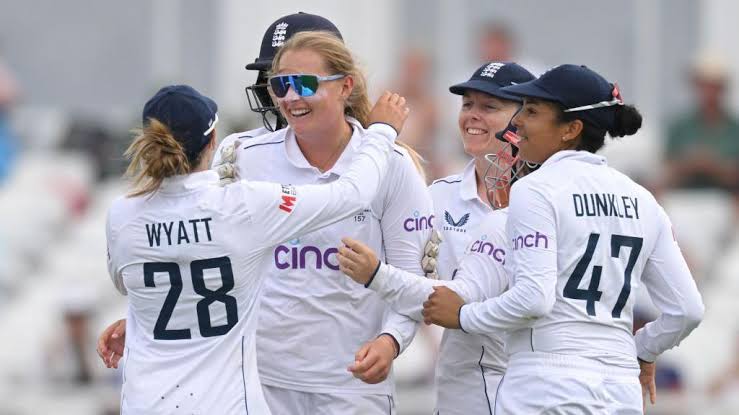
Lord’s has seen almost everything cricket can offer. But this week, the so-called home of cricket will witness something it has never hosted before: a women’s Test match.
England and India will walk out for a four-day Test at Lord’s, turning a venue soaked in tradition into the stage for a long-overdue first. The occasion carries more than sporting value. It carries history, symbolism and the weight of a journey that has taken far too long.
Why This Match Matters
The significance is impossible to ignore. Lord’s has hosted men’s Tests for well over a century, but never a women’s Test until now. Cricbuzz notes the timing sharply: this first comes in 2026, after 142 years and 150 men’s Test matches at the venue.
That makes the match more than a fixture. It is a correction, a celebration and a reminder of how slowly some doors in cricket have opened.
The History Behind the Moment
Lord’s and the MCC carry a complicated history when it comes to women’s inclusion. The MCC was established in 1787 and remained a men-only members’ club for more than two centuries, only opening female membership after a vote in 1998.
India’s presence in this Test adds another layer. On the 1986 tour of England, Diana Edulji and her Indian team were barred from entering the Lord’s Pavilion. Edulji later called out the MCC strongly for its attitude towards women. Four decades later, an Indian women’s team walking out for a Lord’s Test makes the moment even more powerful.
India’s Red-Ball Confidence
India may be coming off a difficult year across formats, but red-ball cricket has brought out some of their best recent performances. Their loss to Australia in Perth earlier this year was their first women’s Test defeat since 2006.
Before that, India had beaten England, Australia and South Africa at home across 2023 and 2024, with victories by 347 runs, 8 wickets and 10 wickets. India have also lost only one Test to England, back in 1995, which gives them genuine confidence going into this historic fixture.
The Big Indian Question
India’s batting and spin departments look settled, but the key could be their pace attack.
Lord’s has its famous slope, and using it well requires the right seamers from the right ends. India could look at combinations involving Renuka Singh Thakur, Sayali Satghare and Kranti Gaud to make the Dukes ball and the slope work in their favour.
India also have a spin call to make. Sneh Rana offers batting depth and proven Test temperament, while Shree Charani brings variety and arrives after topping the World Cup wicket charts with 14 wickets.
England Enter a New Red-Ball Phase
England will have home familiarity, but they are also entering change mode.
Nat Sciver-Brunt is set to captain England in a Test for the first time. England have also selected five players uncapped in the format, moving ahead without some experienced names including Danni Wyatt-Hodge, Kate Cross and Charlie Dean.
Still, England are not short of quality. Lauren Bell brings control and skill, while Lauren Filer offers genuine pace and the ability to go beyond 120 kph. Tammy Beaumont will also have an emotional storyline, with the Test set to be her final international appearance after a decorated 17-year career.
The Pitch and Crowd Could Tell Their Own Story
The Lord’s surface will be watched closely. The recent men’s Test between England and New Zealand at the venue lasted only 166 overs, making it the second-shortest Test recorded at Lord’s by overs, with uneven bounce becoming a major talking point.
Attendance will matter too. Last year’s women’s Ashes Test at the MCG drew an aggregate crowd of 35,365, while Trent Bridge in 2023 had previously set a high mark of 23,207. A strong Lord’s turnout would send a major message about the appetite for women’s Test cricket.
Interesting Angle for Sportish
The most interesting part of this Test is the paradox.
Lord’s is called the home of cricket, but it is only now hosting its first women’s Test. That makes this match both a celebration and a question: why did it take this long?
India’s involvement makes it even stronger because of the 1986 Pavilion incident involving Diana Edulji’s team. What was once a symbol of exclusion now becomes a stage where India and England can push women’s Test cricket forward.
Key Takeaway
England and India are set to play the first-ever women’s Test at Lord’s, a landmark moment arriving after more than a century of men’s Test history at the venue. Beyond the symbolism, the contest also carries serious cricketing intrigue: India’s red-ball strength, England’s new leadership under Nat Sciver-Brunt, Tammy Beaumont’s farewell and the future of women’s Tests all meet at one historic venue.
Lord’s finally gets its first women’s Test.
England and India are set for a historic four-day clash at the home of cricket — 142 years after Lord’s first entered Test history.
#ENGWvsINDW #IndiaWomen #EnglandWomen #LordsTest #WomensTestCricket #HarmanpreetKaur #NatSciverBrunt #CricketNews #Sportish